My wealthy parents laughed. Their attorney moved directly into my path and placed a hand against my body armor. Less than a minute later, deputies were stepping between us, confused voices had filled the courtroom, and a judge was demanding answers no one in that room seemed ready to provide.
My name is Madison Carter, and I had never imagined there would come a day when I entered a courtroom looking exactly like the person everyone had already decided they were supposed to fear.
The hearing was meant to be completely under control. At least, that was what my parents believed.
They had their expensive attorney, their carefully prepared arguments, their polished clothing, and the confidence of people who had spent most of their lives believing that enough money could make almost any version of events sound believable.
They expected me to walk inside nervous.
They expected me to apologize.
They expected me to look like someone who had already been defeated.
Instead, the heavy courtroom doors swung open, and my boots crossed the floor while every conversation around me gradually died into silence.
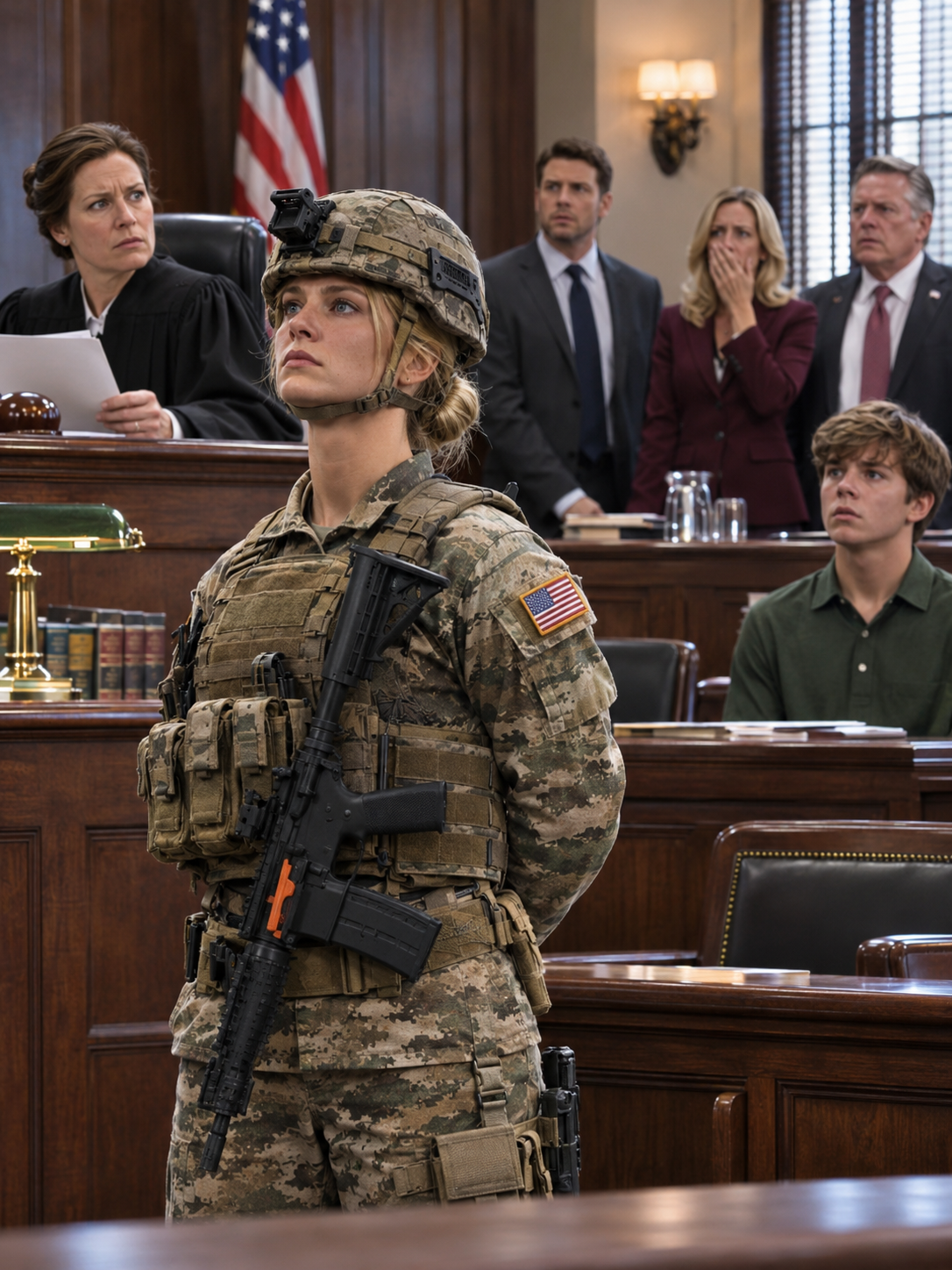
I had come straight from a military operation and had not been given enough time to change. Desert camouflage covered my uniform. A Kevlar vest was secured over my chest. My helmet remained on my head. My service rifle stayed secured against my gear, cleared and visibly marked safe with an orange chamber flag.
To anyone unfamiliar with what I did, the sight probably appeared intimidating.
To my parents, it looked embarrassing.
My father, Richard, gave me the same faint smile he always wore whenever he believed the outcome had already been decided in his favor.
My mother, Evelyn, closed her eyes and murmured, “Unbelievable. She is really doing this.”
For years, they had treated me like the daughter who had rejected their world.
The daughter who chose military service over private schools, luxury vacations, carefully arranged social circles, and the trust fund they constantly held over everyone’s heads.
But I had not come there because of them.
I was there for Ethan.
My fourteen-year-old little brother sat quietly behind their table, looking exhausted in a way no teenager should ever have to look.
His shoulders sagged.
His eyes remained fixed on the floor.
He did not look like a boy who felt protected.
He looked like someone waiting for the adults around him to stop deciding his life without ever asking what he wanted.
That was when I reminded myself of something important.
Family is not measured by who has the most money in the room.
It is measured by who remains beside you when no one else is watching.
My parents claimed the custody dispute was about protecting Ethan.
It was not.
What they wanted was control of the multi-million-dollar trust fund our grandfather had established before he died, and Ethan was the only person standing between them and unrestricted access to that money.
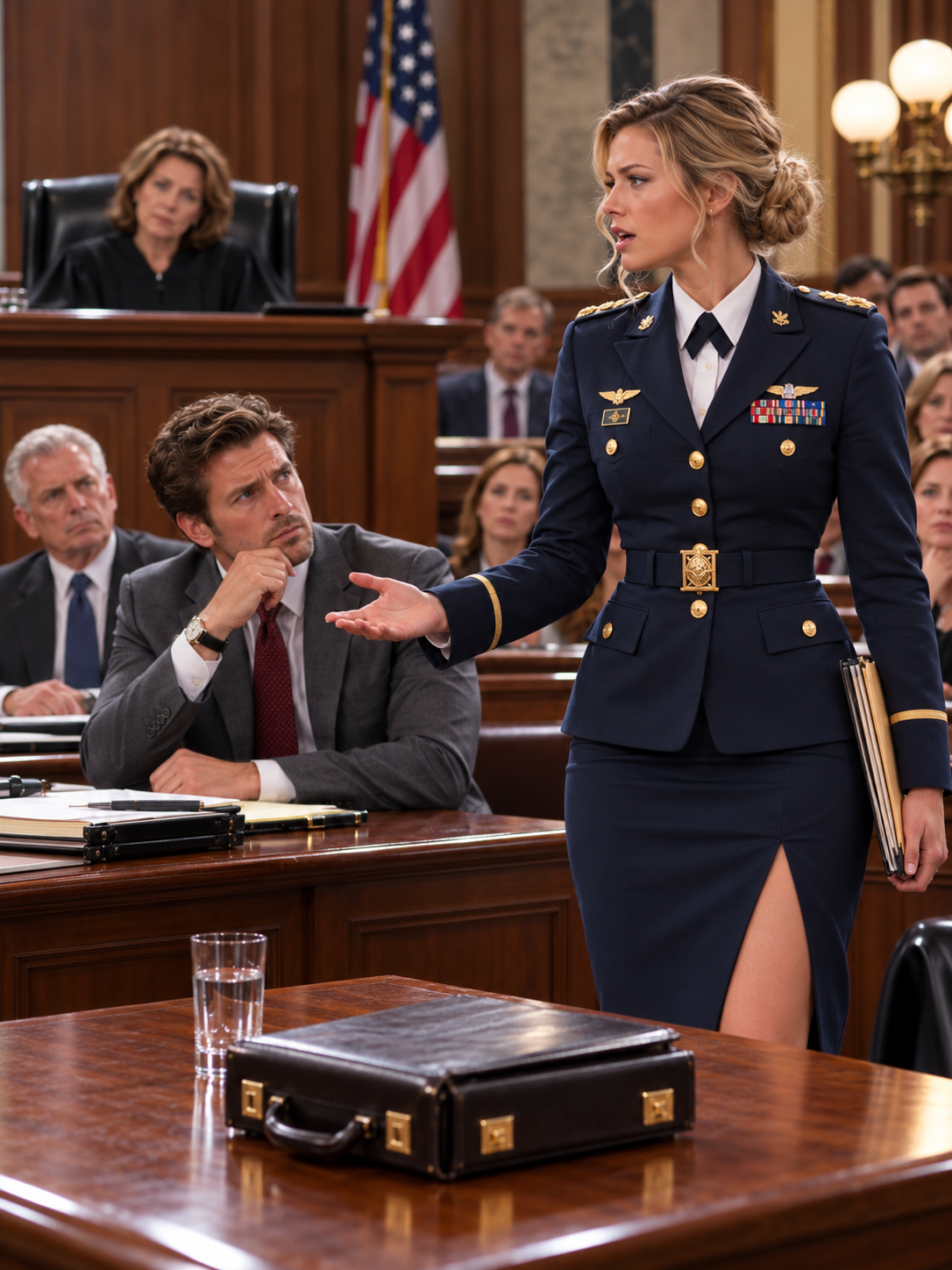
Their attorney, Bradley Collins, stepped directly in front of me before I could reach the witness stand.
Perfect suit.
Perfect smile.
The kind of confidence that comes from believing consequences are something that happen only to other people.
“Your Honor,” he announced, gesturing toward my gear, “this is an absolute circus.”
He described my uniform as some kind of performance.
He called my appearance disrespectful.
He spoke as though years of discipline, sacrifice, deployments, missed holidays, sleepless nights, and military service were nothing more than a costume I had chosen for dramatic effect.
I kept moving.
He came closer.
Then he placed his hand directly against my body armor.
“Take off the costume, little girl,” he said in a low voice. “You are in the real world now.”
Some people confuse silence with weakness.
They forget that restraint is something you learn, not something you lack.
For years, I had trained myself to control my reactions whenever pressure was high. I had learned to evaluate a situation before responding, to recognize the difference between an actual threat and simple arrogance, and never to let someone else’s temper determine what I did.
So when Bradley positioned himself between me and the witness stand, I stopped.
I looked down at his hand.
Then I looked straight at him.
“Remove your hand,” I said.
His smile stayed in place.
For a second, he seemed genuinely surprised that I had answered him at all.
Then the deputies were already moving.
One of them stepped between us and guided Bradley back toward his table while another motioned for me to remain exactly where I was.
Papers shifted across the defense table as Bradley turned abruptly, protesting that he had done absolutely nothing wrong.
The courtroom immediately filled with voices.
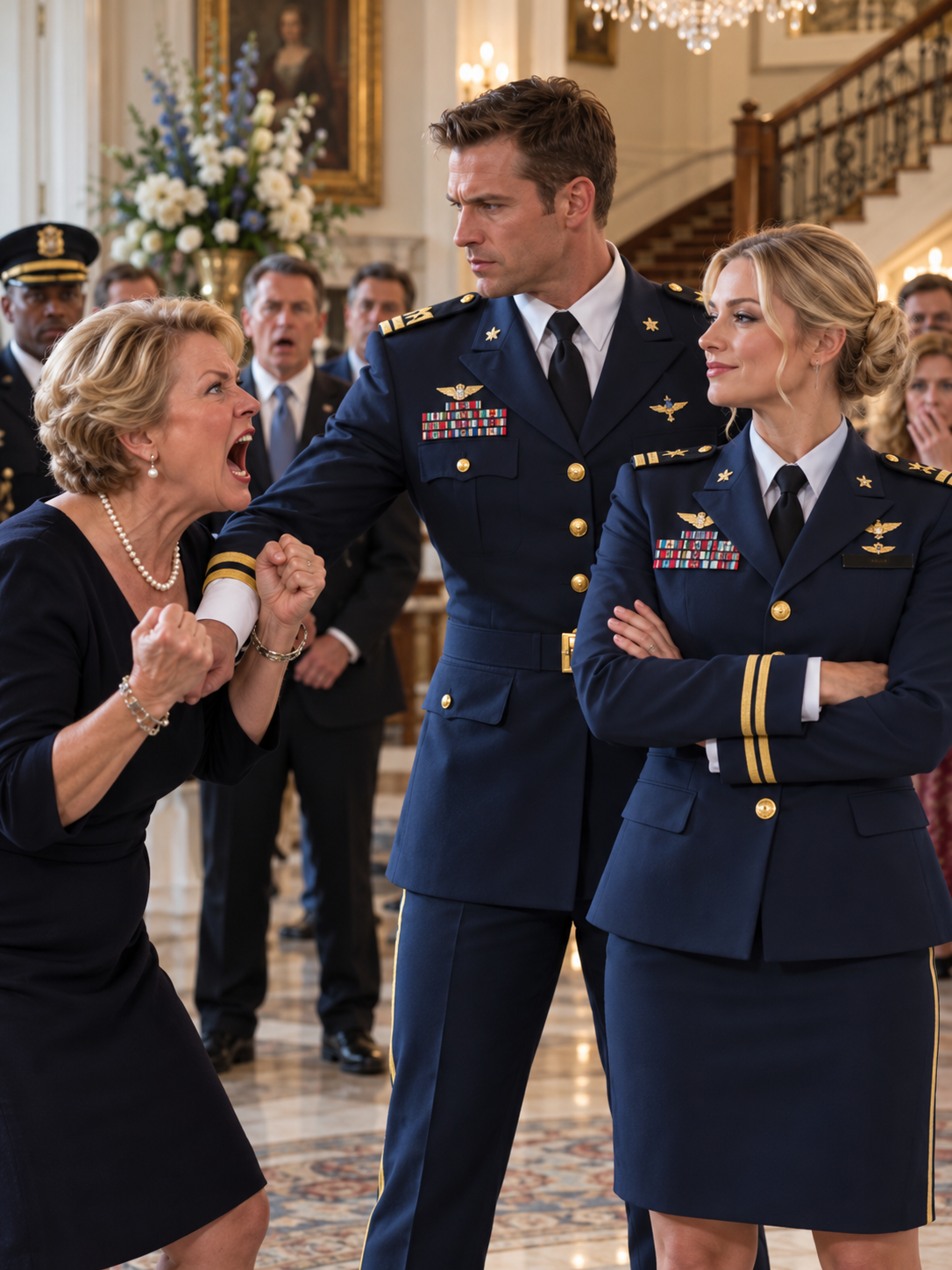
My father stood up.
My mother gasped.
Several people seated in the gallery began whispering all at once.
Then Judge Margaret Reynolds brought down her gavel.
“Enough.”
That single word cut through the entire room.
Everyone went still.
The judge looked first toward Bradley.
Then toward me.
Then toward the secured rifle attached to my gear.
“Lieutenant Commander Carter,” she said in a controlled voice, “before anything else happens in this courtroom, I want a clear explanation of why you arrived dressed this way and why that equipment is present.”
I nodded.
“Yes, Your Honor.”
Bradley immediately attempted to interrupt.
“She is trying to intimidate this court.”
Judge Reynolds did not even turn toward him.
“Mr. Collins, you will speak when I ask you to.”
His mouth closed.
For the first time since I had entered the courtroom, some of his confidence disappeared.
I looked toward Ethan.
He had finally lifted his eyes.
And for the first time that morning, he was looking directly at me.
The deputies remained nearby as the judge turned her attention toward me again.
“Lieutenant Commander Carter,” Judge Margaret Reynolds said, “please remain where you are and explain.”
I did.
Bradley straightened his jacket, clearly humiliated and desperately attempting to recover the authority he had carried into the courtroom.
The judge studied me carefully.
She wanted an explanation.
Everyone did.
My parents looked convinced they had finally been handed the exact moment they could use against me.
Ethan looked frightened.
So I slowly reached toward the secured document pouch attached to my vest and removed the one thing no one in that courtroom had expected me to produce.
A sealed military verification packet.
It had been prepared for judicial review and contained service documentation, official orders, authorization records, and a letter explaining why I had been unable to change before appearing in court.
I handed it to the bailiff.
The bailiff carried it to the judge.
Judge Reynolds opened the packet.
Her expression shifted.
Bradley’s face tightened.
And my parents stopped smiling.
Because inside those pages was more than confirmation of where I had come from that morning.
There was also information connected to the reason I had returned home in the first place.
And that information was connected directly to the truth my parents had spent years trying to keep buried.
When Judge Reynolds finished reading the first page and raised her eyes toward me again, one question remained unanswered.
“Lieutenant Commander Carter,” she said, “what does any of this have to do with your brother’s trust?”